Legal Services
Pasadena Car Accident Lawyer
A Pasadena car accident lawyer answers the adjuster, tracks down the policies that can pay, and protects the crash evidence, so the only thing left on your plate in Pasadena, Texas is your health and your family.
Ceja Law Firm fights for fair compensation for the medical care, the lost income and the limits the injury put on your daily life.
Almost nobody has a plan for the week after a crash. Most people are still guessing how bad the injury is when the first insurance call comes in.
You do not need every document to begin. If you or a family member was hurt here, contact Ceja Law Firm for a free, confidential consultation.
What Should You Do First After a Car Accident in Pasadena, TX?
See a doctor first, even if you think you can walk it off. After that, two things carry real weight in a Pasadena car accident claim: the evidence nobody thought to save, and the paperwork the insurance company sends during the first weeks.
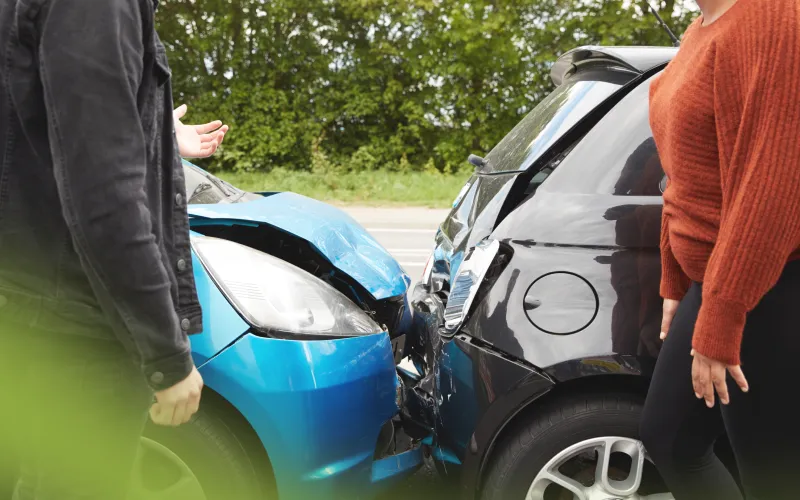
A Pasadena car accident attorney handles both of those while you keep your appointments. If you left without photos or witness information, focus now on protecting what still exists.
Some injuries hurt right away. Others get clearer after you sleep, go back to work or try to lift something. Tell your provider when the crash happened, where it hurts and how the symptoms change, because dated records show when the pain was reported and how it developed.
Texas sets duties at the scene too. Drivers must stop, exchange identifying and insurance information, and give reasonable help to anyone injured (Texas Transportation Code §550.023).
A crash involving injury, death or a vehicle that cannot be driven safely must also be reported by the quickest available means, which inside the city generally means the Pasadena Police Department (Texas Transportation Code §550.026).
This is ordinary traffic here, not a rare event. The Texas Department of Transportation (TxDOT) recorded 3,512 crashes in Pasadena during 2024, including 13 deaths and 86 suspected serious injuries (TxDOT city crash data). That describes the city, not your collision.
If you or a family member was hurt in a Pasadena crash, call Ceja Law Firm before you answer the insurance company or sign any paperwork. We can review what the insurer has sent and explain what comes next. Start a free case review today. Hablamos español.
What Does the CR-3 Show, and What Evidence Should You Save?
When Pasadena Police work a crash, the officer prepares a Texas Peace Officer’s Crash Report, known as a CR-3, which TxDOT processes through its Crash Records Information System, or CRIS. The city sells copies at its Accident Records window at 1201 Davis St. for $6, weekdays from 8 a.m. to 4 p.m. (City of Pasadena public records).
The CR-3 documents what the officer recorded. It does not decide civil responsibility on its own.
While that report is processed, hold on to what it will not contain:
- Photos of both vehicles, the plates, the lanes and the traffic signals.
- Dashcam files, copied somewhere safe before the device records over them.
- Names and phone numbers of witnesses.
- Photos of visible injuries when that feels appropriate.
- Insurance letters, tow paperwork and repair estimates.
- The damaged car itself, unrepaired until the damage is photographed.
Keep it in one place and hand it to your lawyer. Vehicle damage shows the point and direction of impact. A witness may remember which light changed. A car sent to the shop before anyone documented it cannot be photographed back into the condition it was in.
Some of the most useful evidence belongs to somebody else. A store near Fairmont Parkway or Spencer Highway may have an exterior camera that caught traffic before impact, and each business decides on its own how long to keep that footage.
A lawyer can send a written preservation request asking a business to hold a specific recording. The request cannot bring back a file that was already erased.
What Happens When the Insurance Company Calls After a Crash?
Insurance calls usually start while you are still sorting through all of this.
An adjuster is the person evaluating the claim for an insurance company. The adjuster may ask for a recorded statement, meaning an interview the company records and keeps.
The company may also send a medical authorization, a form that can open your health records depending on how it is worded, or a release, a settlement document that can permanently close the claims its language covers. Insurers request medical records for a reason, and how broadly that form is written matters.
The Texas Department of Insurance (TDI) tells drivers to consider future medical treatment before they sign a release (TDI auto insurance guide).
Your own policy is a different situation. It may require you to cooperate with your own insurer, so do not ignore those requests. What changes is who is asking and what the request actually authorizes.
If an adjuster has already asked you for a statement, an authorization or a release, contact Ceja Law Firm before you answer or sign. We can review the request with you at no cost.

How Can You Prove Fault If the Insurance Company Blames You?
Fault in a Texas car accident claim is proven with evidence of what each driver did and how those actions caused the collision.
The legal concept is negligence, meaning a driver failed to use reasonable care and that failure caused the crash and the losses that followed.
Different evidence answers different questions:
| Evidence | What it can help show |
|---|---|
| Crash report (CR-3) | What the officer recorded after the collision |
| Vehicle damage | Where and how the two vehicles made contact |
| Photos and video | Vehicle movement, signals and road conditions |
| Witness accounts | What other people saw each driver do |
| Traffic controls | Which driver may have had the right of way |
| Electronic vehicle data | Speed, braking or accelerator use in some vehicles |
| Medical records | Whether the crash caused or worsened the injuries claimed |
A traffic citation can be relevant without deciding civil responsibility by itself, and the same is true of the police report.
The rules that conduct gets measured against, covering speed, following distance, turns, lane use and right of way, appear in Texas Transportation Code Chapter 545. A violation becomes useful in an injury claim when the evidence connects that conduct to the crash.
What Happens If You Were Partly at Fault for a Pasadena Crash?
Texas then divides responsibility among the people involved.
Under Texas Civil Practice and Remedies Code §§33.001 and 33.012, a person cannot recover damages when that person’s share of responsibility is greater than 50%. At 50% or less, the court reduces the recoverable damages by that percentage.
Say the supported damages come to $100,000 and 20% of the responsibility lands on the person bringing the claim. The amount becomes $80,000, before insurance limits and other issues enter the math.
An insurer assigns its own percentage while it evaluates the claim. That number is the company’s position, not a court’s finding, and it often rests on an early statement, an incomplete report or evidence nobody collected.
When the percentage is disputed, photographs, video, vehicle damage and witness accounts give your lawyer something concrete to argue with. Ceja Law Firm compares the CR-3 against the physical evidence before advising you how to respond to an insurer that says you caused part of the crash.

Which Insurance Can Help Pay for Your Injuries After a Crash?
More than one policy may provide compensation after a Pasadena crash. The other driver’s liability coverage is one source, and your own policy may include coverage for medical bills, lost income or other injury-related losses.
Texas requires drivers to carry at least $30,000 in bodily injury liability per injured person and $60,000 per crash. Texas minimum policies also include $25,000 in property damage coverage, commonly described together as 30/60/25 (TDI auto insurance guide).
That coverage generally becomes relevant when the other driver is legally responsible for the crash, because Texas handles car accidents as a fault state.
A minimum policy can run out long before a serious injury stops costing money. What your losses come to and how much insurance exists are two separate questions, and a Pasadena auto accident attorney treats them that way.
Your declarations page is the summary sheet listing your coverages, limits and deductibles. It is one of the first documents worth finding.
| Coverage | What it may pay |
|---|---|
| Liability coverage | Injury-related losses when the insured driver is legally responsible |
| PIP | Covered medical bills, part of lost income and certain nonmedical costs |
| MedPay | Covered medical expenses |
| UM/UIM | Covered losses when the responsible driver has no insurance or too little |
Find that page instead of relying on memory. Plenty of drivers do not know every coverage they bought until they need to use one.
How Can PIP, MedPay and UM/UIM Help After a Pasadena Crash?
- Personal Injury Protection, or PIP, matters early because it can pay covered medical expenses and part of your lost income without waiting for the liability claim against the other driver to finish. Texas auto policies include PIP unless a named insured rejects it in writing (Texas Insurance Code §1952.152).
- Medical payments coverage, or MedPay, also pays covered medical expenses, without the lost-income piece that TDI describes for PIP.
- Uninsured and underinsured motorist coverage, or UM/UIM, becomes important when the responsible driver carries no insurance or not enough insurance to cover your injury-related losses. Texas insurers must provide it unless a named insured rejects it in writing (Texas Insurance Code §1952.101), and it can also apply after a hit-and-run in Pasadena when the policy requirements are met.
Other policies can enter depending on who owned the vehicle and why the driver was on the road. A driver working at the time can bring an employer or commercial policy into the claim.
Medical bills create a separate timing problem.
The other driver’s bodily-injury insurer does not work like health insurance paying each visit as treatment happens. It generally evaluates the injury claim once it has enough information about responsibility and damages.
PIP, MedPay or health insurance can carry treatment in the meantime. When health insurance or another benefit plan pays, reimbursement rights or outstanding medical balances can affect the amount that finally reaches you.

Ceja Law Firm PLLC
Did your accident happen recently?
Talk to a Pasadena personal injury lawyer who can review your case today. Request a free evaluation through our contact form.
Can a Vehicle-Damage Release Affect Your Injury Claim?
Vehicle damage and bodily injury can be handled separately after a Pasadena crash. Accepting payment for repairs or a total loss does not automatically settle your injury claim, but the wording of anything you sign matters.
A release can permanently close the claims covered by its language. That becomes especially important when the document says “full and final release” or refers broadly to all claims arising from the crash.
Before signing paperwork tied to a vehicle payment, make sure it does not give up your right to seek compensation for medical treatment, lost income or other injury-related losses.
If the insurer has already sent you a release, contact Ceja Law Firm before you sign it. We can review whether the paperwork affects your personal injury claim at no cost.

How Do Treatment, Lost Income and Future Care Affect Your Claim?
Medical records, wage records and information about future treatment decide which losses a car accident claim can actually support.
Pain often changes after the first day. Someone leaves the scene sore and feels far worse after sleeping, lifting or returning to work.
Tell your providers when each symptom started and what it keeps you from doing. Those dated entries show when the symptoms were reported and how treatment progressed.
A treatment gap is a stretch when expected care stops or gets delayed. An insurer may question whether continuing symptoms came from the crash when the record holds a long gap with nothing explaining it.
There are legitimate reasons for missed care. Work schedules, transportation, insurance problems or a clinic with no openings all interrupt treatment. Tell your provider and your lawyer why, so that period does not sit blank in the file.
A prior injury does not end a new claim either. The question becomes whether the crash aggravated the old condition, meaning made it worse, and records from before and after the crash are what separate the two.
Lost income needs its own documentation. Useful records include pay stubs, time sheets, tax records, employer verification, medical work restrictions and anything showing missed shifts or reduced hours.
Lost wages describe income already missed. Lost earning capacity concerns a reduced ability to earn in the future because of lasting limitations. The two require different evidence.
The effects also run past the invoices. Driving, sleeping through the night, lifting a child, doing physical work, handling what you normally handle at home. Specific examples document how the injury changed daily life.
Texas law separates damages into economic and noneconomic categories, which Texas Civil Practice and Remedies Code Chapter 41 defines. Economic damages cover measurable financial losses. Noneconomic damages can include physical pain, mental anguish and physical impairment.
What Determines the Value of a Pasadena Car Accident Claim?
Compensation in a Texas car accident claim is built from what the evidence proves about your treatment, your income and your limitations. There is no calculator that turns a diagnosis or a bill total into the value of a Pasadena car accident claim. The amount can depend on:
- How the crash happened;
- Each person’s share of responsibility;
- Whether the collision caused the injuries claimed;
- Past and expected future treatment;
- Lost income and earning capacity;
- Permanent limitations;
- The effect on daily life;
- Available insurance limits;
- Medical balances and reimbursement claims;
- The strength of the supporting evidence;
- The risks and costs of litigation.
One more distinction decides what you actually take home:
- Gross recovery is the total amount recovered.
- Net recovery is what remains after attorney fees, case costs, medical balances and other authorized deductions.
The written fee agreement controls the fee and explains responsibility for costs.
A settlement offer can land while your doctor still has not said whether you will need injections or surgery. TDI tells consumers to weigh future medical treatment before signing a release.
Ceja Law Firm compares an offer against the medical record, the wage evidence and the available coverage. If an offer is already in front of you, contact Ceja Law Firm before you sign. We can review the offer and release with you at no cost.

How Long Does a Car Accident Claim Take, and When Must You File?
In ordinary Texas car accident cases you generally have two years from the crash to file a lawsuit, though exceptions can change that date (Texas Civil Practice and Remedies Code §16.003).
How long the insurance claim takes is a different question from the lawsuit deadline.
A claim usually moves through these stages:
Investigation
The lawyer gathers the CR-3, photographs, video, witness information and insurance documents.
Treatment and documentation
Medical records show diagnoses, progress, restrictions and expected future care.
Demand
A written request for payment backed by the evidence of fault and losses.
Negotiation
The two sides test whether the insurer will pay an acceptable amount.
Lawsuit, when necessary
Filing suit opens discovery, the court-supervised exchange of evidence.
Mediation or trial preparation
Disputed cases can require testimony, experts or additional proceedings.
The pace depends on how long treatment continues, whether responsibility stays disputed, how many policies need review and how the insurer responds.
Treatment can run for months while the filing deadline keeps running behind it.
Evidence runs on a much shorter schedule. A business erases camera footage, a witness moves, a damaged car gets repaired or sold. A claim can be legally open and already hard to prove long before year two.
Government-vehicle crashes add another deadline. The Texas Tort Claims Act can require written notice to a governmental unit within six months, and municipal charter provisions can require notice sooner.

Which Pasadena Crashes Require a Different Investigation?
Some crashes need a different investigation from day one:
- A commercial truck crash in Pasadena brings driver logs, company records and commercial policies.
- An Uber or Lyft crash can turn on the driver’s app and trip status.
- A drunk-driving crash can produce evidence through a parallel criminal case.
- A car that hits a motorcycle rider or a bicycle rider presents different physical evidence and different fault arguments.
- Driving for work at the time can open an on-the-job injury claim in Pasadena alongside the car accident claim.
- A driver who leaves the scene turns the claim toward your own uninsured motorist coverage.
- A fatal crash creates wrongful death and survival claims for certain family members and the estate.
Each of those deserves its own analysis, and each has its own page. This one covers the ordinary Pasadena car accident claim.
The practical reason to start early is simple: the filing deadline can still be far away while the useful evidence is already going missing.
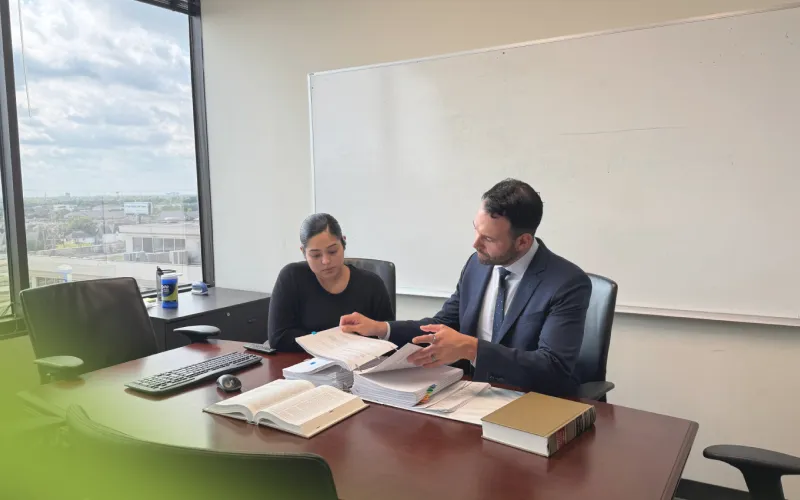
* Images may include staff or dramatizations and are for illustrative purposes only.
Questions to Ask Before Hiring a Pasadena Car Accident Lawyer
Ceja Law Firm works on a contingency fee. You pay no attorney’s fees out of pocket to get started, and fees are collected only if we recover money on your behalf, under the terms of the applicable agreement. The case review is free.
Being undocumented does not by itself prevent you from bringing a Texas personal injury claim. Speaking with an attorney also does not notify Immigration and Customs Enforcement or any other agency, and consultations are confidential.
PIP, MedPay or health insurance can help during treatment, depending on your coverage. The responsible driver’s insurer generally evaluates the injury claim once responsibility and damages are documented, rather than paying each bill as it arrives.
Your own UM/UIM coverage may apply to injury losses when you carry it and the policy requirements are met. PIP or MedPay may also help with covered medical expenses. Your declarations page shows which coverages and limits you actually have.
You can accept, reject or negotiate it. First find out whether treatment is finished, whether future care is expected and whether lost income is documented, because a release can permanently close the claims its language covers.
Bring whatever you already have: crash photos, the police report, insurance letters, medical paperwork and any declarations pages you can find. You do not need a complete file before you call Ceja Law Firm.
Who Will Personally Handle Your Pasadena Car Accident Case?
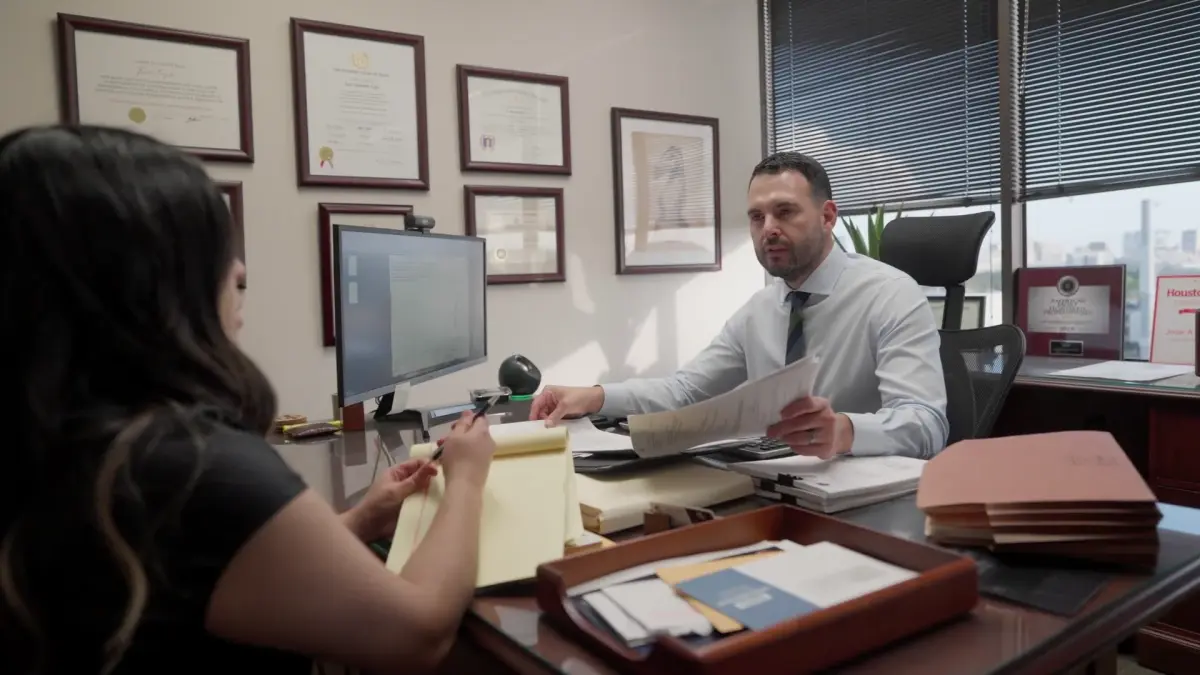
Jose Ceja handles his clients’ injury cases himself. Licensed in Texas since 2009, he is the one who reviews your file, deals with the adjuster and goes through any settlement recommendation with you before you decide. Whether to accept it or keep going stays your call.
He spent the early part of his career as a prosecutor and is Board Certified in Criminal Law by the Texas Board of Legal Specialization. Firm results include a $60,000 full policy limits recovery in a car accident claim; prior results do not guarantee a similar outcome.
Get Your Claim Reviewed Before You Sign the Insurance Release
At Ceja Law Firm we review the release before you sign it, along with the crash itself, the coverage on both sides, and anything else the insurance company has already sent you. Bring whatever you have, even paperwork you do not understand.
We’ll review your personal injury claim at no cost, and you pay no fee unless we recover compensation for you. You can tell us what happened in Spanish if that is easier.
All consultations are 100% confidential, and speaking with an attorney does not notify ICE or any government agency.
We see clients by appointment at 4008 Vista Rd., Suite A101, and take car accident claims across Pasadena, including Parkgate North, Baywood Oaks, Brookwood, and Parkview Estates.
This page is general information, not legal advice. No attorney-client relationship exists until you and the firm sign a written agreement. Prior results do not guarantee a similar outcome. Every case depends on its facts, evidence, available coverage and legal issues.
Call 713-993-7959. Available 24/7. Se habla español.
Free Consultation | No Fee Unless We Win | 713-993-7959 | Hablamos Español